
Vibratory Controlled Feeding System
A system that vibrates components or materials along a track or trough is known as a vibratory-controlled feeding system. The system comprises a track or trough, a control unit, and a vibratory feeder. A tray or bowl that vibrates at a high frequency makes up the vibratory feeder.
The components or materials move down the track or trough as a result of the vibration. To regulate the flow rate and guarantee that the components or materials are fed at a constant pace, the vibration’s amplitude and frequency can be changed.
In manufacturing and assembly processes, vibratory-controlled feeding systems are frequently used to feed components to a production line. In general, vibratory-controlled feeding systems are very effective, and they may be tailored to fit the unique requirements of a variety of applications.
Products can flow through manufacturing more rapidly when conveyors are used, which helps to satisfy increased demand. Moreover, it is necessary to carry out the tasks of storing, sorting, orientating, assigning, placing, and inserting promptly, safely, and without causing any harm to the goods.
Vibratory-controlled feeding systems have applications across the food industry. Such as:
- Chips
- Wafers
- Extruded snacks
- Cereals
- Slurry coated snacks
- Low-bulk density food products
Our vibratory-controlled feeding system
You can obtain the highest level of conveying automation, assured lifespan, controlled or metric feeding, and sanitary operation by adding vibratory-feeding systems to the food processing lines.
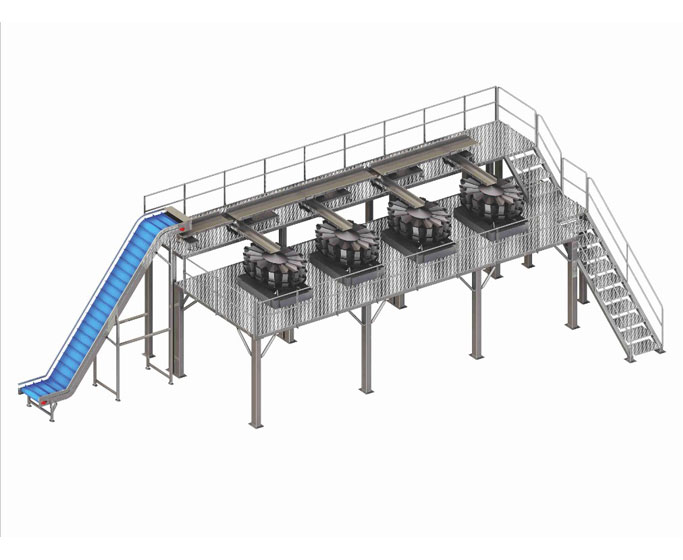
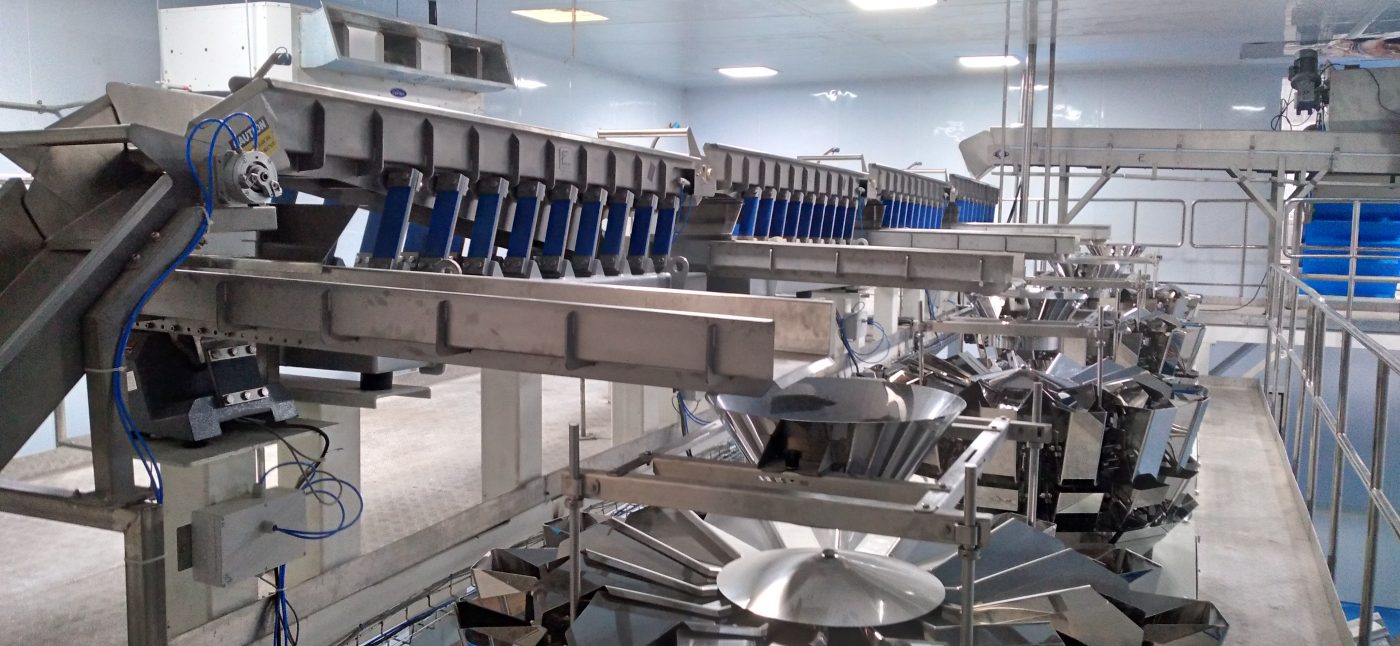
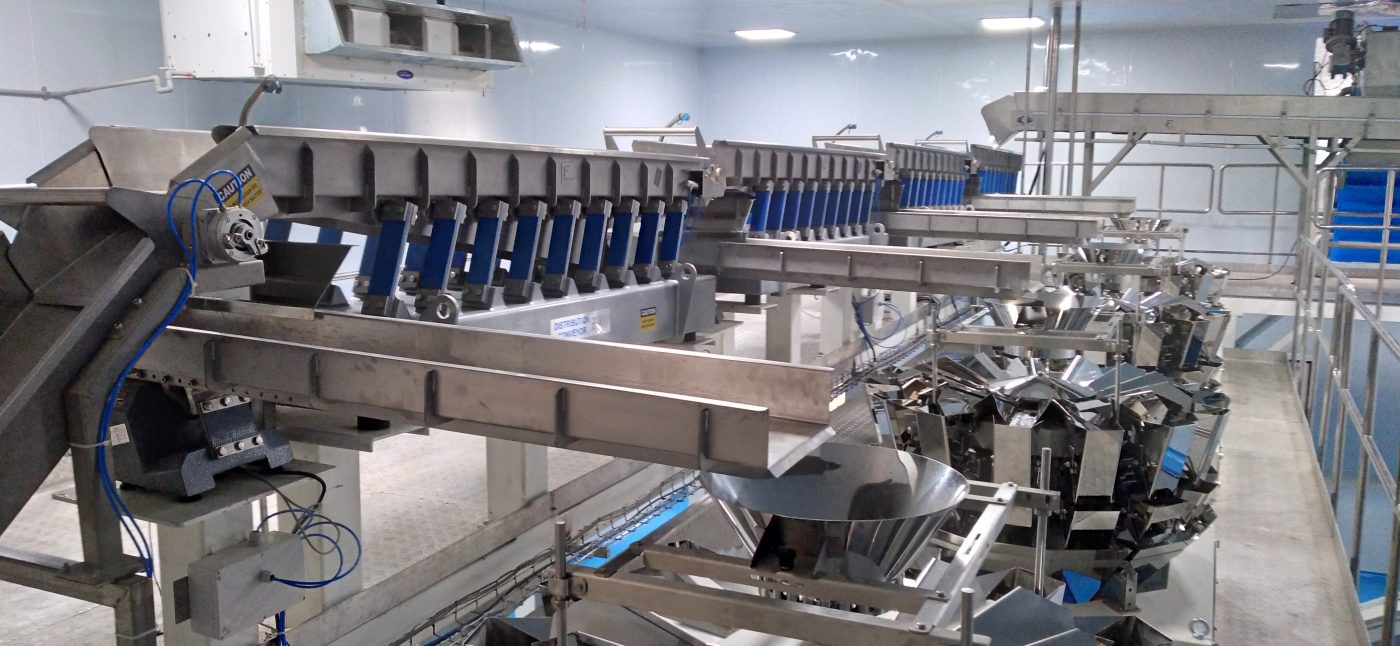
Our vibratory-controlled feeding system offers the following features:
- Continuous feed for the upstream line is provided by the electromagnetic vibratory feeder
- 100% sanitary rigid construction
- Offers perfect integration while enhancing material’s durability & manufacturing costs.
- Adaptable to the need for item distribution and as per desired conveying requirements
- Emphasis towards food safety and absence of residual regions
- Durable 2.5 mm SS Sheet construction for the tray
- Minimum breakage and delicate product handling
- Dedication to the highest standards of excellence
- GMP-compliant design and fully hygienic
Benefits:
- Provides delicate, intellectual and reliable product transfer system
- Maximized product conveying efficiency without breaking the product and very minimal product coating loss
- Helps in conveying difficult to handle product
- The aisle sides provide access for installation and cleaning
- Hygiene is driven to ensure food safety from contamination and reduces labor costs
- No moving parts
- Have multiple drops
- 100% sanitary rigid construction
- Large carrying capacity
- Noiseless system operation, less vibration and dynamic load for a lighter support apparatus
- It is fully modular
We can provide you with the professional guidance in addition to the real-world manufacturing-related solutions you need.
Frequently Asked Questions
A Vibratory Distribution System (VDS) is a material distribution system designed to evenly distribute food products across multiple processing or packaging points. It helps maintain a controlled and consistent product flow throughout the production line.
The VDS uses controlled vibration to move and distribute products evenly across the required outlets. The vibration and product flow can be adjusted according to the product characteristics and production requirements.
A VDS can be used in snack-food and food-processing lines for distributing products such as chips, namkeen, pellets, extruded snacks, peanuts, and other free-flowing products before further processing or packaging.
Key benefits include uniform product distribution, controlled product flow, reduced manual handling, improved line efficiency, better feeding accuracy, and easy integration with downstream processing or packaging equipment.
The capacity depends on the product type, product density, number of outlets, vibration settings, and system configuration. The VDS can be designed according to the required production capacity and application.
Yes. A VDS can be configured for different free-flowing food products. The design and vibration settings can be selected according to product size, shape, weight, density, and flow characteristics.
Yes. VDS is suitable for distributing products such as potato chips, namkeen, peanuts, pellets, extruded snacks, and other similar products where controlled and uniform distribution is required.
Yes. Controlled vibration helps maintain a more uniform product flow and distribution across the outlets. This can help improve downstream feeding and packaging consistency.
Yes. VDS can be integrated with automated production and packaging lines. Its operation can be synchronized with upstream and downstream equipment to maintain a controlled product flow.
Yes. A VDS can be customized according to production capacity, product characteristics, number of outlets, machine dimensions, factory layout, and integration requirements.
The number of outlets depends on the application, required production capacity, product flow, and downstream equipment. The distribution system can be designed according to the specific layout and feeding requirements.
Space requirements depend on the number of outlets, system dimensions, production capacity, and plant layout. The VDS can be designed to fit into the available production area and connect with existing equipment.
Yes. A properly designed VDS can support high-volume production by maintaining a controlled and continuous flow of products to downstream equipment.
The system automatically distributes products across the required outlets, reducing the need for operators to manually transfer or distribute products. This can improve productivity and process consistency.
Food-processing VDS systems can be designed with hygienic construction and accessible product-contact areas to support easy cleaning and maintenance. Cleaning requirements depend on the product and machine configuration.
For food-processing applications, food-grade stainless steel can be used for product-contact parts and other suitable components. The exact material specification depends on the application and customer requirements.
Regular cleaning, inspection of vibratory components, checking fasteners and drive components, and following a preventive maintenance schedule can help maintain reliable operation and consistent product flow.
Yes. Controlled and uniform product distribution can reduce product accumulation, uneven feeding, and unnecessary manual handling, helping improve overall process efficiency and reduce wastage.
Consider product characteristics, required capacity, number of outlets, distribution accuracy, vibration control, hygienic design, cleaning requirements, available space, automation, integration capability, and after-sales support.
Fabcon India provides customized conveying and food-processing solutions designed around specific production requirements. Its VDS can be configured according to product characteristics, production capacity, plant layout, automation needs, and downstream feeding requirements.