
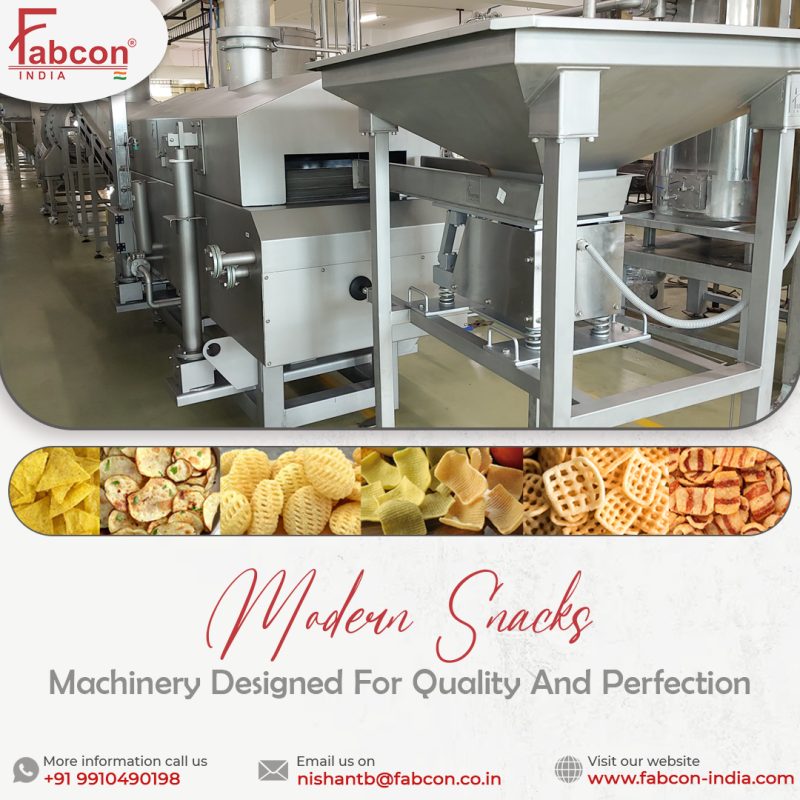
India has a rich tradition of snacks, from crispy bhujia and sev to samosa, kachori, mathri, namkeen and many regional favourites. For generations, these snacks have been prepared using traditional methods that depend heavily on skilled workers and manual processes.
Today, the food processing industry is changing rapidly. Modern machinery, automation and advanced processing technology are helping manufacturers produce traditional Indian snacks on a much larger scale without compromising their familiar taste and texture.
The goal is simple: Traditional Taste. Modern Technology. Consistent Quality.
Let’s explore how modern technology is transforming traditional Indian snack manufacturing.
1. From Manual Frying to Automated Frying Systems
Traditionally, snacks were fried in open kadhais, where temperature control and frying time depended largely on the experience of the karigar.
Modern industrial frying systems offer better process control through:
- Automatic Temperature Control
- Uniform Heat Distribution
- Controlled Frying Time
- Continuous Oil Circulation
- Improved Oil Filtration
- Consistent Frying Results
Advanced oil filtration systems help remove food particles and fines before they burn and affect oil quality. This supports better oil management and helps maintain product appearance and taste.
The result is more consistent frying with improved production efficiency.
2. Smart Seasoning Systems for Consistent Taste
In traditional snack production, masala and spices are often added manually. This can lead to uneven flavour distribution.
Modern seasoning systems help manufacturers achieve more consistent flavouring through:
- Automatic Masala Dosing
- Uniform Seasoning Distribution
- Controlled Oil or Slurry Application
- Dynamic Weigh-Based Seasoning
- Recipe-Based Process Control
Whether manufacturing peri peri makhana, masala peanuts, aloo bhujia or flavoured namkeen, modern seasoning technology helps deliver a consistent taste experience.
3. Automation in Dough Preparation and Extrusion
Products such as sev, bhujia and extruded snacks require proper dough preparation and controlled forming.
Modern mixing and extrusion equipment helps manufacturers improve:
- Dough Consistency
- Product Shape and Size
- Production Speed
- Process Repeatability
- Reduced Manual Handling
Automated dough preparation and extrusion systems also help manufacturers manage larger production requirements.
4. Advanced Conveying and Material Handling Systems
Moving snacks manually between different production stages can increase labour requirements and the risk of product breakage.
Modern conveyor systems help connect different processing operations smoothly.
Important conveying solutions include:
- Belt Conveyors
- Bucket Elevators
- Horizontal Motion Conveyors
- Cooling Conveyors
- Product Transfer Systems
- Automated Material Handling Solutions
These systems help improve material movement, reduce unnecessary handling and support a more organized production line.
5. Dynamic Weighing for Better Production Accuracy
Accuracy is important in modern snack manufacturing, particularly when dealing with expensive ingredients, seasoning materials and finished products.
Dynamic weighing systems help manufacturers measure ingredients and products according to predefined weight requirements.
Benefits include:
- Accurate Ingredient Dosing
- Controlled Material Usage
- Improved Batch Consistency
- Reduced Material Wastage
- Better Production Monitoring
Weigh-based systems offer manufacturers greater control over their production process compared with manual or purely volumetric operations.
6. Better Hygiene and Food Safety
Modern food processing equipment is designed with greater attention to hygiene, cleaning and food safety.
Features such as stainless steel construction, accessible equipment design and suitable cleaning arrangements help manufacturers maintain better production hygiene.
Depending on the application, equipment design can support:
- Easy Cleaning and Maintenance
- Reduced Product Contamination Risks
- Improved Equipment Accessibility
- Better Process Organization
- Consistent Manufacturing Practices
Hygienic equipment design is an important part of building a modern food processing facility.
7. One Production Line, Multiple Snack Opportunities
Consumer preferences are continuously evolving. Manufacturers are introducing new flavours, shapes and snack varieties to meet changing market demand.
With properly designed and configured machinery, manufacturers can develop production lines for multiple product categories, such as:
- Bhujia and Sev
- Namkeen and Mixture
- Samosa and Kachori
- Mathri and Namak Para
- Kurkure and Extruded Snacks
- Makhana and Roasted Nuts
- Pellet-Based Snacks
Customized machinery configurations can help manufacturers expand their product range and respond to new market opportunities.
8. The Future of Traditional Indian Snack Manufacturing
The future of the snack industry lies in combining traditional recipes with modern engineering.
Automation, process control, advanced frying, accurate seasoning and efficient conveying systems are helping manufacturers improve consistency and production efficiency.
Traditional Indian snacks are not losing their identity. Instead, technology is helping manufacturers deliver familiar flavours to more consumers, across India and international markets.
