
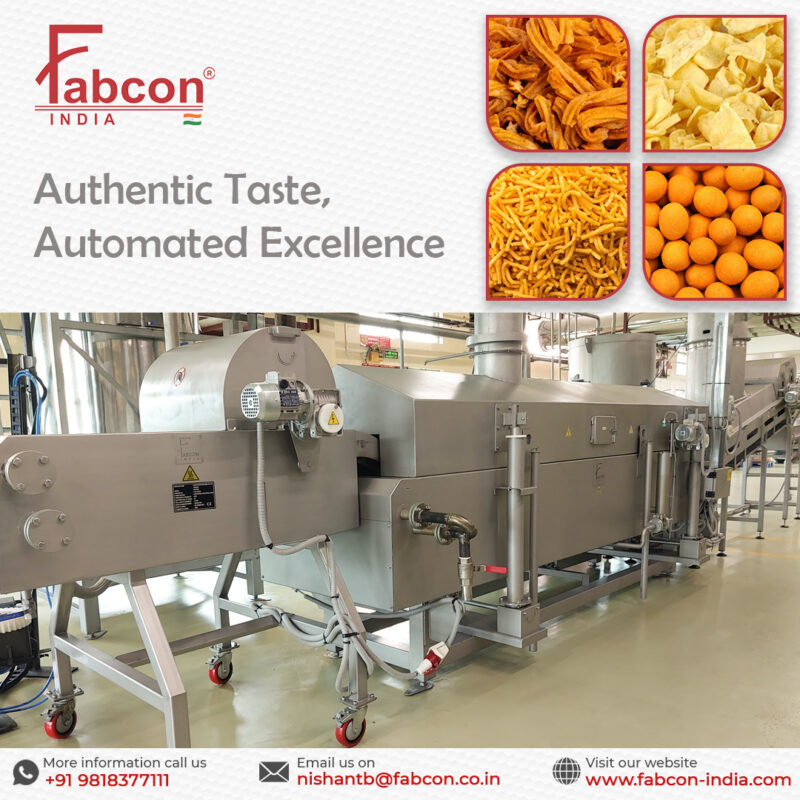
Namkeen is one of India’s most popular snack categories. From traditional bhujia and sev to aloo bhujia, mixture, mathri and modern extruded snacks, namkeen products are enjoyed across the country.
With increasing demand for packaged snacks, consistent quality and convenient food products, starting a namkeen manufacturing business can be an attractive opportunity for entrepreneurs and food manufacturers.
But how do you start? What machinery do you need? How does the manufacturing process work?
Let’s understand the important steps involved in setting up a commercial namkeen manufacturing unit.
Before investing in machinery, decide which products you want to manufacture.
Some popular namkeen products include:
- Bhujia and Aloo Bhujia
- Sev and Masala Sev
- Mixture and Chivda
- Moong Dal and Chana Dal
- Khatta Meetha
- Mathri and Namak Para
- Extruded Snacks
- Regional Traditional Namkeen
Your product selection will determine the machinery, production capacity and processing technology required.
Understand the Namkeen Manufacturing Process
The manufacturing process varies depending on the type of namkeen. However, a typical industrial production line involves the following stages:
Step 1: Raw Material Preparation
Select quality ingredients such as besan, pulses, flour, spices and other recipe ingredients. Proper preparation helps maintain consistent product quality.
Step 2: Mixing and Dough Preparation
Ingredients are mixed according to the product recipe to achieve the required dough consistency.
Step 3: Forming and Extrusion
The prepared dough is processed through suitable equipment to produce the desired shapes, such as sev, bhujia and other namkeen varieties.
Step 4: Frying
The formed snacks are fried using an appropriate industrial frying system. Controlled temperature and frying time help achieve consistent colour, texture and crispiness.
Step 5: Oil Removal
Excess oil is removed using suitable de-oiling or oil-draining arrangements.
Step 6: Seasoning and Flavouring
Spices and masala are added through a seasoning system to achieve uniform flavour distribution.
Step 7: Cooling and Packaging
The finished snacks are cooled before weighing and packaging. Proper packaging helps maintain freshness and product quality.
Essential Machinery for a Namkeen Manufacturing Plant
Selecting the right machinery is one of the most important decisions when setting up a namkeen production facility.
Depending on the product range and production capacity, machinery may include:
- Flour and Raw Material Handling System
- Mixing Machine
- Dough Extruder
- Namkeen Fryer
- Oil Filtration System
- De-Oiling Conveyor
- Seasoning System
- Dynamic Weighing System
- Cooling Conveyor
- Material Handling Conveyors
- Automatic Packaging Machine
The machinery configuration should be planned according to the manufacturing process, required output and available factory space.
Why Automation Is Important in Namkeen Manufacturing
Traditional namkeen production often depends on manual operations. However, growing production requirements make automation increasingly important.
An automated production line can help manufacturers achieve:
- Consistent Product Quality
- Uniform Frying Results
- Better Seasoning Distribution
- Reduced Manual Handling
- Improved Production Efficiency
- Accurate Product Weighing
- Better Process Control
- Smooth Material Movement
Automation also helps manufacturers manage larger production volumes with improved operational consistency.
Conclusion
The namkeen manufacturing industry offers exciting opportunities for entrepreneurs and established food manufacturers in India.
With the right product selection, quality raw materials, suitable machinery and efficient production planning, you can build a strong foundation for your namkeen manufacturing business.
Whether you are planning a small production unit or a fully automated namkeen plant, choosing the right food processing technology is an important step towards long-term success.
Planning to Start Your Namkeen Manufacturing Business?
Connect with Fabcon India for customized frying, seasoning, weighing and conveying solutions.
Fabcon India – Precision in Engineering. Excellence in Every Bite.
Website: https://www.fabcon-india.com
(FAQs)
Q1. Is namkeen manufacturing a profitable business in India?
Namkeen manufacturing offers opportunities due to the regular demand for packaged snacks. Profitability depends on raw material costs, production efficiency, product quality, pricing and distribution.
Q2. Which machines are required for a namkeen manufacturing plant?
Depending on the product, machinery may include mixers, dough extruders, industrial fryers, oil filtration systems, de-oiling conveyors, seasoning systems, weighing equipment and packaging machines.
Q3. How is namkeen manufactured on an industrial scale?
The typical process includes raw material preparation, mixing, forming or extrusion, frying, oil removal, seasoning, cooling and packaging.
Q4. Can different types of namkeen be manufactured in one plant?
Yes. A properly planned plant with suitable machinery and product-specific configurations can manufacture multiple varieties of namkeen.
Q5. Why is an industrial seasoning system important?
An industrial seasoning system helps distribute spices and flavours more uniformly, improving product consistency across production batches.
Q6. How can automation improve namkeen production?
Automation can reduce manual handling, improve production consistency, support accurate weighing and streamline material movement.
